

Is this actually the right move for you?
Some of these questions are uncomfortable and all of them matter. This is not a sales quiz — a real proportion of people who take it get told to sort something else out first, and that is a legitimate result.
What these medications actually do.
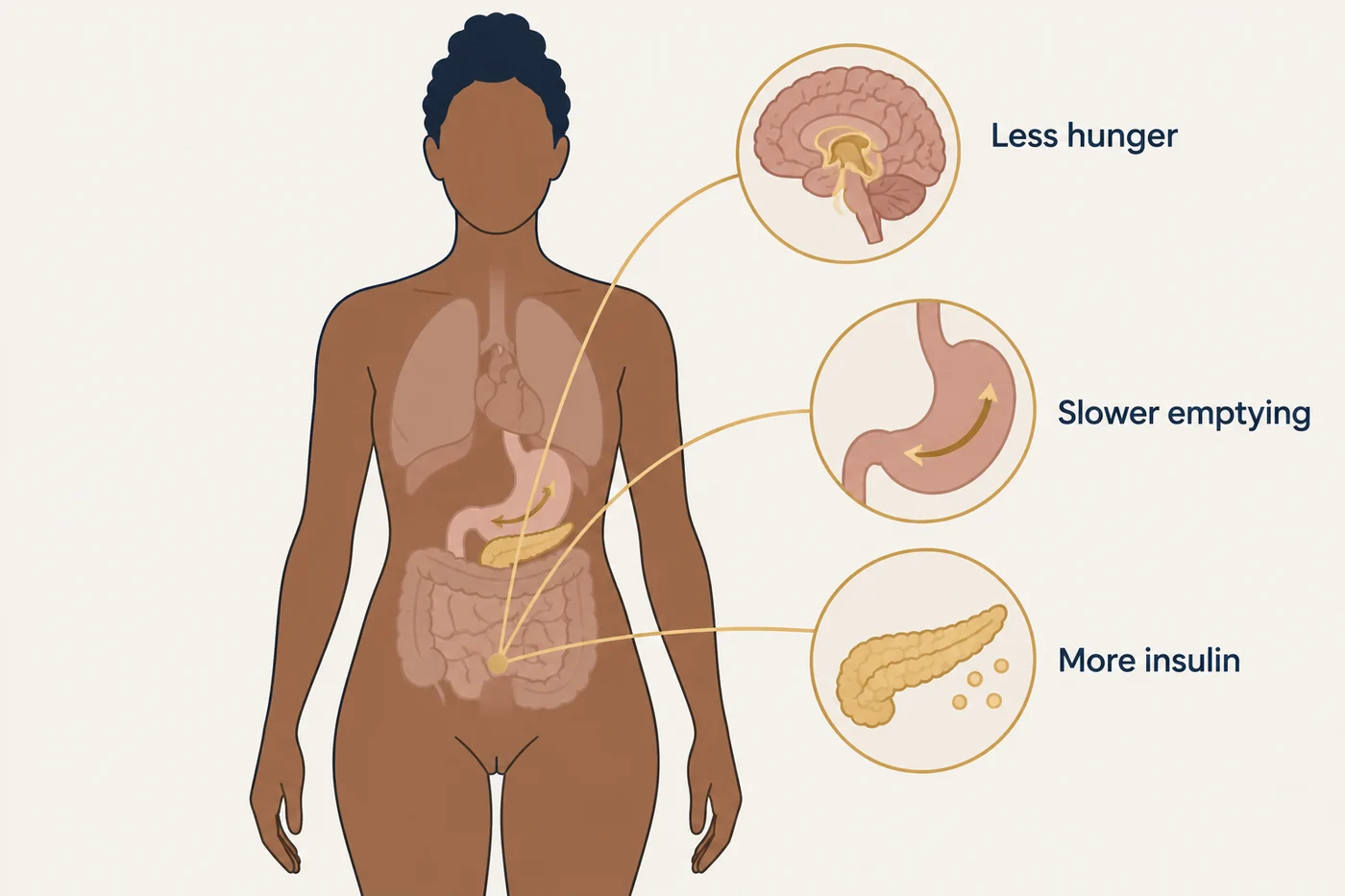
They are not stimulants, they are not "fat burners", and they do not speed your metabolism up. They work on signalling — specifically, on the hormone conversation your gut has with your brain after you eat.
Your stomach empties slower
Food stays put longer, so fullness lasts longer after a smaller amount.
Appetite signalling changes
These receptors exist in the parts of the brain that regulate appetite. The constant background negotiation about food gets quieter.
Insulin response improves
Insulin release becomes better matched to what you actually ate — glucose-dependent, rather than blunt.
The generations differ in how many of these signals they engage. Semaglutide acts on the GLP-1 receptor. Tirzepatide acts on two — GLP-1 and GIP. Neither is automatically the right one for you.
Said plainly
Medication supplied through a programme like this is prescribed individually after evaluation, and in many cases is compounded rather than being a branded, FDA-approved product. You are entitled to a clear explanation of exactly what you are being prescribed, in what form, and why — before you pay for anything. Ask. Any clinic worth using will welcome the question.

Your glow up starts with a conversation
New clients start with a free 45-minute consultation with Tathiana.