
Hitting a weight loss plateau can be incredibly frustrating when you have been doing everything right, but you can switch from semaglutide to tirzepatide if you hit a weight loss plateau to jumpstart your progress again. This medical transition is a common and highly effective way to overcome a metabolic stall. Navigating this change safely requires the right clinical guidance to ensure your body adjusts smoothly and continues dropping pounds.
Understanding Your Weight Loss Plateau on Semaglutide
When you first begin an injectable weight loss medication, the pounds often seem to melt away. However, it is entirely normal for your progress to slow down or come to a sudden halt after several months of treatment.
What Qualifies as a Clinical Weight Loss Plateau?
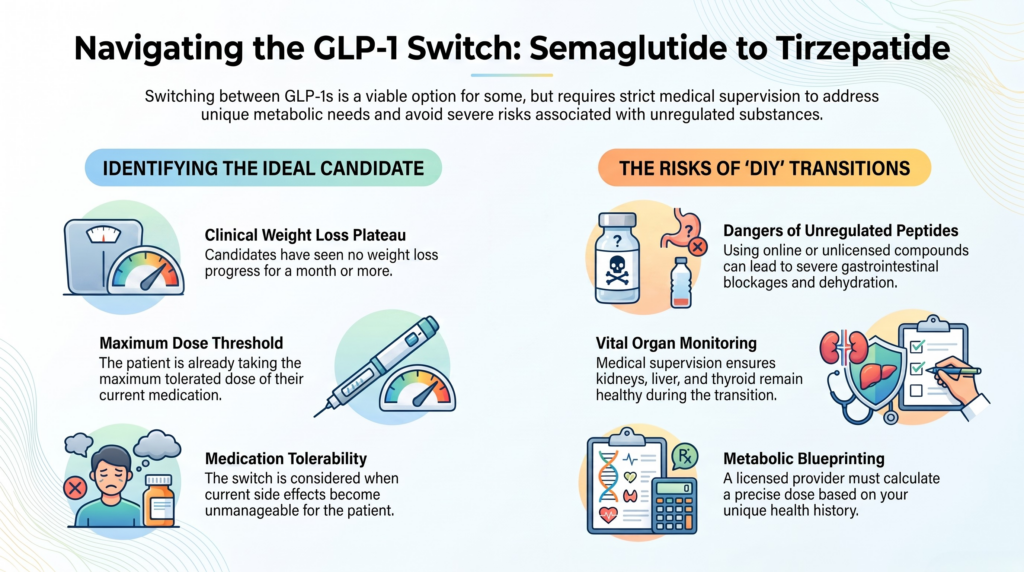
Many patients confuse a normal, one-week fluctuation in water weight with a true medication stall. In medical terms, a clinical weight loss plateau occurs when you experience zero weight loss for four or more consecutive weeks. This timeline must occur despite strict adherence to your prescribed medication dose, a reduced-calorie diet, and a consistent exercise routine. If your scale has fluctuated by the same pound for a month, your body has likely reached a state of metabolic equilibrium.
Why Semaglutide (Ozempic/Wegovy) Can Stop Working Over Time
Semaglutide works by mimicking a single hormone in your body called GLP-1 (glucagon-like peptide-1). This hormone slows down digestion and tells your brain that you are full.
Over time, your body adapts to this single signal. Your metabolism naturally slows down to protect itself from losing more weight, a process called metabolic adaptation. When your body adjusts to the constant level of GLP-1, your appetite may begin to return, or your weight loss may stop entirely, even on the maximum dose of 2.4 mg.
Troubleshooting Your Plateau Before Making the Switch
Before changing your entire medication protocol, it is vital to rule out hidden factors that could be stalling your progress:
- Track Your Macronutrients: Are you accidentally eating more carbohydrates or fats than you realize? Keeping an accurate food journal for one week can reveal hidden calories.
- Evaluate Daily Movement: Your body becomes more efficient at exercise over time. If you always walk at the same pace, try adding light strength training to boost your resting metabolic rate.
- Check Daily Protein Intake: If you do not eat enough protein, your body will burn muscle tissue instead of fat for fuel. Losing muscle lowers your metabolism, making a plateau much more likely.
The Science: How Tirzepatide Breaks Through a Semaglutide Wall
If troubleshooting your lifestyle habits does not break the stall, the issue is likely hormonal. This is where the advanced biochemistry of tirzepatide comes into play.
Semaglutide vs. Tirzepatide: Single vs. Dual-Action Mechanisms
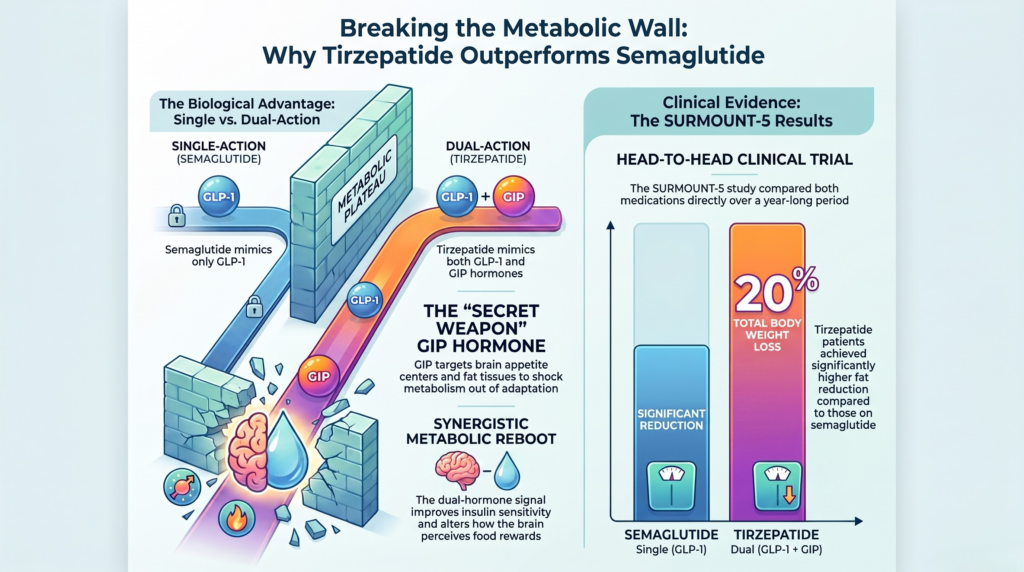
While semaglutide mimics only the GLP-1 hormone, tirzepatide is a dual-action medication. It mimics GLP-1, but it also mimics a second hormone called GIP (glucose-dependent insulinotropic polypeptide). Because it targets two separate hormone pathways instead of just one, tirzepatide provides a much stronger signal to the brain and metabolic system.
The Role of GIP Receptors in Overcoming Metabolic Adaptation
The addition of the GIP hormone is the secret weapon for breaking through a semaglutide wall. GIP receptors are located directly in your brain’s appetite center and your body’s fat tissues.
GIP works synergetically with GLP-1 to improve how your body burns fat and stores energy. It enhances insulin sensitivity and alters how your brain perceives reward from food. When your body becomes desensitized to a single GLP-1 medication, introducing this second pathway shocks your metabolism out of its adapted state.
What the Clinical Data Says: The SURMOUNT-5 Head-to-Head Results
The medical community has thoroughly researched this transition. In the groundbreaking SURMOUNT-5 clinical trial, researchers compared tirzepatide and semaglutide head-to-head in a year-long study.
The results were clear. Patients taking tirzepatide achieved significantly higher percentages of total weight loss compared to those on semaglutide. On average, individuals on tirzepatide lost up to 20% or more of their body weight, proving that the dual-hormone approach is vastly superior for long-term fat reduction.
Can You Safely Switch from Semaglutide to Tirzepatide?
The short answer is yes, but it must be done under strict medical supervision. You cannot simply swap one pen for another on your own.
Who is an Ideal Candidate for the Switch?
You are a prime candidate for this therapeutic transition if you meet the following criteria:
- You have been stuck in a true clinical weight loss plateau for a month or more.
- You are currently taking the maximum tolerated dose of semaglutide.
- You are experiencing unmanageable side effects on semaglutide and want to see if a dual-hormone medication is better tolerated.
The Dangers of “DIY” Off-Label or Unlicensed Cross-Titration
Purchasing unregulated weight loss peptides online or guessing your own dosage adjustments is highly dangerous. Semaglutide and tirzepatide are potent medical compounds that alter your endocrine system. Attempting to switch medications without a licensed provider can lead to severe gastrointestinal blockages, extreme dehydration, or dangerous drops in blood sugar.
Why Medical Supervision is Essential for a Safe Transition
Every individual possesses a unique metabolic blueprint. A licensed medical practitioner must evaluate your current health history, review your specific symptoms, and calculate a precise transition dose. Ongoing medical monitoring ensures that your kidneys, liver, and thyroid remain perfectly healthy as your body adapts to the new medication.
The Step-by-Step Transition Protocol: How to Switch Safely
Moving from a single-hormone injection to a dual-hormone injection requires a careful, phased protocol to prevent shock to your digestive system.
Crucial Timing: Do You Need a Washout Period?
A “washout period” refers to the time spent letting a medication completely leave your system before starting a new one. When moving from semaglutide to tirzepatide, a lengthy washout period is usually not required.
Because both medications share the GLP-1 pathway, most clinical protocols recommend waiting exactly seven days after your last semaglutide injection. On the day your next semaglutide shot would normally be due, you simply administer your first dose of tirzepatide instead.
Managing the “Reset”: Why Most Patients Start Back at Lower Doses
Even if you are currently taking the highest dose of semaglutide (2.4 mg), you will generally not start at the highest dose of tirzepatide (15 mg). Tirzepatide introduces an entirely new hormone (GIP) to your body. Starting at the maximum dose would overwhelm your digestive tract and cause severe sickness. Practitioners usually “reset” your treatment by starting you at a low or moderate introductory dose of tirzepatide to ensure your body tolerates the new hormone safely.
The Semaglutide to Tirzepatide Approximate Dose Conversion Chart
While a medical provider must determine your final prescription, the following chart outlines the standard clinical transition pathways used by medical professionals:
| Current Semaglutide Weekly Dose | Recommended Tirzepatide Starting Weekly Dose | Transition Strategy Type |
|---|---|---|
| Low Dose: 0.25 mg – 0.5 mg | 2.5 mg | Standard Conservative Reset |
| Moderate Dose: 1.0 mg | 2.5 mg or 5.0 mg | Moderate Step-Up |
| High Dose: 1.7 mg – 2.4 mg | 5.0 mg or 7.5 mg | Advanced Cross-Titration |
What to Expect During Your First 30 Days After Switching
During your first month on tirzepatide, your primary goal is acclimation, not rapid weight loss. You may feel a renewed sense of fullness, a decrease in “food noise” (constant thoughts about food), and minor changes in your digestion. Do not be discouraged if the scale does not drop immediately during the first two weeks; your body is busy adjusting to the new dual-hormone receptors.
Medical Weight Loss at Rio Glow Aesthetics & Wellness
If you live in or around the Inland Empire, you do not have to navigate this complicated clinical transition by yourself.
Our Personalized Approach to Weight Management in Rancho Cucamonga
At Rio Glow Aesthetics & Wellness, located in Rancho Cucamonga, California, weight loss is treated as a highly customized medical journey. The board-certified practitioners look beyond the numbers on the scale. They evaluate your hormonal health, lifestyle habits, and unique weight loss history to design a safe, highly effective treatment blueprint tailored entirely to you.
How Rio Glow Practitioners Customize Your Cross-Titration Schedule
The medical team at Rio Glow specializes in managing medication transitions smoothly. They carefully review your current semaglutide dosage, analyze the severity of your plateau, and build a precise, customized cross-titration schedule. This direct medical oversight minimizes your downtime and eliminates the guesswork, helping you transition seamlessly without restarting from absolute zero.
Supportive Wellness Therapies: Boosting Your Results with IV Drip and NAD+ Therapy
Transitioning to a new weight loss medication can sometimes cause temporary fatigue as your body adapts to lower calorie intake and a faster metabolic rate. Rio Glow Aesthetics & Wellness offers an advanced, holistic approach by combining your weight loss injections with supportive wellness therapies.
- IV Drip Therapy: Custom vitamin infusions can replenish vital nutrients, combat mild nausea, and keep your body perfectly hydrated during the transition week.
- NAD+ Therapy: This powerful coenzyme works at a cellular level to supercharge your mitochondria, instantly boosting your daily energy levels and revving up a sluggish metabolism.
Anticipating and Managing Side Effects During the Transition
Any change in medication carries a slight risk of physical symptoms, but knowing what to look for allows you to manage them proactively.
Are Gastrointestinal Side Effects Worse on Tirzepatide?
Clinical studies show that tirzepatide is remarkably well-tolerated. Because the GIP hormone actually helps soothe certain pathways in the brain, many patients report fewer severe side effects on tirzepatide than they did on semaglutide. However, minor gastrointestinal upset can still occur during the initial cross-titration weeks.
Mitigating Nausea, Bloating, and Fatigue During Cross-Titration
If you experience mild discomfort during your transition month, utilize these clinical tips:
- Prioritize Hydration: Drink at least 80 to 100 ounces of water daily to keep your digestive tract moving smoothly.
- Eat Small, Frequent Meals: Overfilling your stomach will trigger immediate nausea. Eat smaller portions throughout the day.
- Avoid Trigger Foods: Stay far away from fried, greasy, or highly sugary foods, which significantly worsen bloating and gas on GLP-1 medications.
Warning Signs That Require Immediate Medical Attention
While mild nausea is normal, certain severe symptoms require immediate medical intervention. Seek immediate care if you experience severe, persistent abdominal pain radiating to your back, uncontrollable vomiting, an inability to keep liquids down, or a sudden, severe yellowing of your eyes or skin.
What Does the Weight Loss Trajectory Look Like After the Switch?
Once your body fully adapts to the dual-hormone action of tirzepatide, you can look forward to renewed physical progress.
Average Timeline for Breaking the Plateau and Resuming Weight Loss
Every patient responds uniquely, but most individuals begin breaking through their weight loss stall during weeks three to six of their new tirzepatide protocol. Once you titrate up to your optimal therapeutic dose (typically 7.5 mg or 10 mg), you can generally expect a safe, steady weight loss trajectory of one to two pounds per week to resume.
Long-Term Maintenance: Preventing a Second Plateau on Tirzepatide
To keep your metabolism firing and prevent hitting a secondary plateau down the road, it is crucial to build sustainable daily habits:
- Incorporate Progressive Resistance Training: Lift weights to maintain and build lean muscle tissue, which keeps your baseline metabolism high.
- Focus on High-Fiber Foods: Ensure you eat plenty of fibrous vegetables to keep your digestion operating optimally.
- Schedule Routine Check-Ins: Maintain regular monitoring appointments with your medical provider to adjust your dosage proactively before a stall can solidify.
Frequently Asked Questions (FAQs)
Do I need to taper down my semaglutide dose before stopping?
No, you do not need to slowly lower your semaglutide dose before making the switch. Because both medications interact with the same GLP-1 receptor pathways, you can stop semaglutide completely and begin your calculated tirzepatide dose exactly one week later under a practitioner’s care.
Will switching to tirzepatide work if semaglutide didn’t work at all?
Yes, it is highly possible. If your body did not respond well to semaglutide, you may simply be less sensitive to the single GLP-1 hormone pathway. The addition of the GIP hormone in tirzepatide provides an entirely separate metabolic signal that can trigger weight loss even if semaglutide failed completely.
Can I switch back to semaglutide if I don’t tolerate tirzepatide?
Yes. If you transition to tirzepatide and discover that you prefer your previous medication or experience unmanageable side effects, your medical provider can safely reverse the protocol and transition you back to an appropriate dose of semaglutide.
How long does it take for tirzepatide to start working after switching?
Most patients begin to notice a substantial increase in fullness and a significant drop in food cravings within the first 24 to 48 hours after their very first tirzepatide injection. However, breaking your physical weight loss plateau on the scale may take three to six weeks as your dose titrates upward.
Can I mix semaglutide and tirzepatide together?
Absolutely not. You must never combine or inject both medications at the same time. Mixing these two powerful peptides can cause an accidental overdose, resulting in dangerous drops in blood sugar and severe, acute gastrointestinal complications that may require emergency hospitalization.
How do I get started with a Tirzepatide program at Rio Glow?
Getting started is simple. You will begin by booking a comprehensive, personalized consultation with a licensed practitioner at the Rancho Cucamonga clinic. The team will thoroughly review your weight loss history, check your current lab work, and craft a customized, medically supervised transition plan to safely guide you from semaglutide to tirzepatide.
Ready to Break Through Your Weight Loss Plateau?
You do not have to accept a frustrating stall in your wellness journey. If your current weight loss medication has stopped delivering the results you deserve, the expert medical team at Rio Glow Aesthetics & Wellness is ready to help you break through the wall safely and effectively.
Take the first step toward reclaiming your health and maximizing your metabolic potential. Contact Rio Glow Aesthetics & Wellness in Rancho Cucamonga today to book your personalized weight loss consultation and discover if switching to tirzepatide is the perfect solution for your body.