
The journey to your “pre-baby” body can feel like an uphill battle. With the massive popularity of Tirzepatide (found in brand names like Mounjaro and Zepbound), it is natural to wonder if this “miracle” injection is safe while nursing. While the medication has transformed weight loss for millions, the rules for breastfeeding mothers are more complex than a simple “yes” or “no.”
As of early 2026, the official stance from the FDA remains cautious. However, new research is beginning to paint a clearer picture of how this medication interacts with human milk. At Rio Glow Aesthetics and Wellness, we believe in making decisions based on science, safety, and your personal health history.
What the Science Says: 2026 Clinical Data on Tirzepatide in Breast Milk
The biggest fear for any nursing mother is passing a medication to her baby through her milk. To understand the risk, we have to look at how Tirzepatide is built.
- Molecular Analysis: Tirzepatide is a very large “peptide” molecule. Its weight is approximately 4,813 Daltons. In the world of science, size matters. Most drugs that pass easily into breast milk are under 800 Daltons. Because Tirzepatide is so large, it is very difficult for it to cross the biological barriers into your milk ducts.
- Bioavailability in Infants: Even if a tiny amount of the drug made it into your milk, the infant’s digestive system is a harsh environment. Tirzepatide is a protein-based medicine. When a baby swallows it, their stomach acid would likely break the protein down before it could ever enter their bloodstream.
- The 2025/2026 Lactation Studies: Recent clinical trials completed in late 2025 have been very encouraging. In these studies, researchers tested the milk of mothers taking Tirzepatide. In nearly every sample, the medication was undetectable. This suggests that while we still practice caution, the actual transfer of the drug to the baby appears to be extremely low—less than 0.05% of the mother’s dose.
Official Guidance: FDA, Zepbound, and Mounjaro
Despite the promising new data, official labels still carry a warning. This is because “undetectable” in a small study is not the same as a guarantee of safety for everyone.
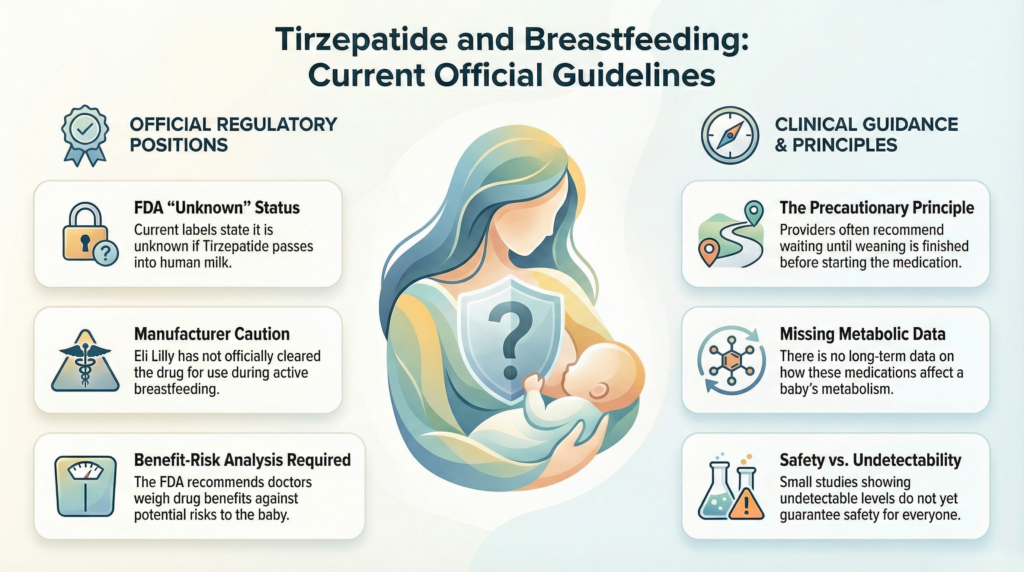
- FDA Labeling: Currently, the FDA label states that it is “unknown” if Tirzepatide passes into human milk. They recommend that mothers and doctors weigh the benefits of the drug against the potential risks to the baby.
- Manufacturer Recommendations: Eli Lilly, the maker of Zepbound and Mounjaro, suggests that mothers exercise caution. They have not yet officially cleared the drug for use during active breastfeeding.
- The “Precautionary Principle”: Because we don’t have long-term data on how GLP-1 medications might affect a baby’s developing metabolism, many providers still recommend waiting until you have finished weaning.
Impact on Milk Supply and Quality
A common concern we hear at Rio Glow Aesthetics and Wellness is whether the medication will “dry up” milk supply. The drug itself doesn’t stop your body from making milk, but its side effects might.
- The Calorie Deficit Factor: Making milk requires an extra 300 to 500 calories a day. Because Tirzepatide makes you feel full very quickly, you might accidentally eat too little. If your body thinks it is starving, it will slow down milk production to save energy.
- Hydration & Electrolytes: Nursing mothers need a lot of water. Tirzepatide can sometimes cause a loss of thirst or mild nausea, leading to dehydration. This is the fastest way to see a drop in your supply.
- Nutritional Density : Your milk needs specific “good fats” and vitamins to help your baby grow. If you are losing weight too rapidly, the quality of your milk could change. It is vital to focus on high-protein, nutrient-dense foods if you are using any weight loss tool while postpartum.
Potential Risks to the Nursing Infant
While the drug likely doesn’t reach the baby in large amounts, we must watch for “indirect” signs of sensitivity.
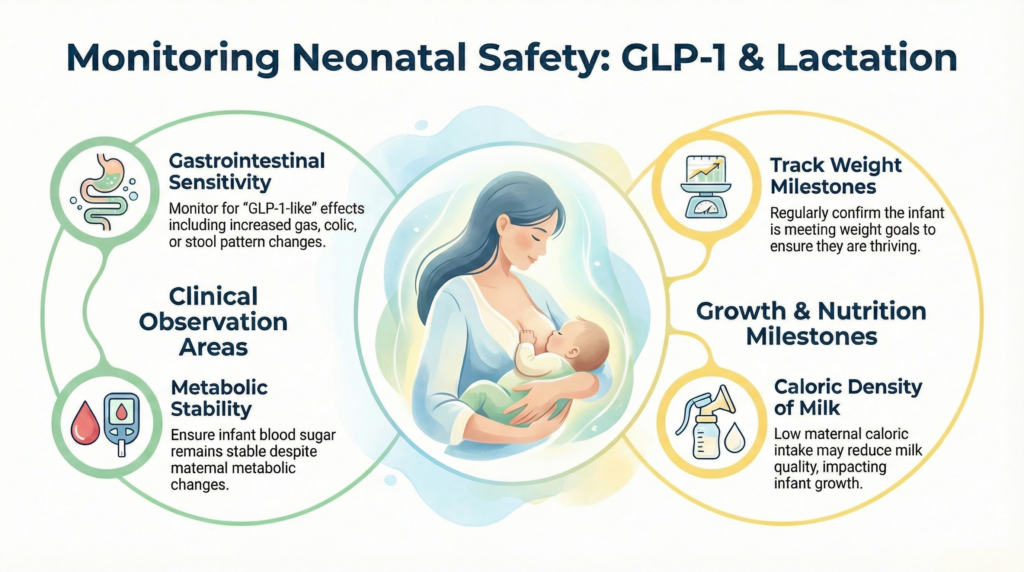
- Gastrointestinal Sensitivity: Some experts suggest monitoring infants for “GLP-1-like” side effects. This includes looking for increased gas, colic, or changes in their stool patterns.
- Metabolic Concerns: We want to ensure the baby’s blood sugar remains stable. While unlikely, any change in a mother’s metabolism can theoretically impact the baby.
- Growth Tracking: It is essential to ensure your baby is meeting their weight milestones. If a mother’s caloric intake is too low, the milk may not be caloric enough for the infant to thrive.
The “Pump and Dump” Strategy: Does It Work?
Many moms ask if they can take their shot on a Friday, “pump and dump” their milk for 24 hours, and resume feeding on Saturday. Unfortunately, this does not work with Tirzepatide.
- The 5-Day Half-Life: This medication is designed to last a long time. It has a “half-life” of about five days. This means that five days after your shot, half of the medicine is still in your blood.
- Steady State: Because the drug stays in your system for weeks, “pumping and dumping” is a waste of liquid gold. If the drug is in your system, it is in your system 24/7.
Practical Alternatives for Postpartum Weight Loss
If you aren’t ready to start Tirzepatide yet, Rio Glow Aesthetics and Wellness offers other ways to support your journey.
- Safe Medications: Some older medications like Metformin have much more data supporting their safety during breastfeeding.
- IV Hydration Therapy: Our customized IV drips can help boost your energy and hydration, which are often depleted in the “fourth trimester.”
- Timing the Restart : Most mothers find success by planning their “first shot” for the week they plan to stop nursing. This gives you a goal to look forward to while keeping your baby’s infancy medication-free.
Why Choose Rio Glow Aesthetics and Wellness?
Located in Rancho Cucamonga, Rio Glow Aesthetics and Wellness is a physician-led sanctuary where wellness meets aesthetics. We don’t just hand out prescriptions; we provide a holistic experience. Our team understands the unique challenges of the postpartum period. We offer personalized consultations to help you decide the exact right moment to begin your medical weight loss journey.
People Also Ask (FAQ)
1. Can I take Ozempic while breastfeeding instead?
Like Tirzepatide, Ozempic (Semaglutide) is not officially recommended during breastfeeding due to a lack of long-term human data. However, some small studies have also shown very low transfer into milk.
2. How long should I wait after stopping breastfeeding to start Tirzepatide?
You can typically start as soon as you have finished your final nursing or pumping session. There is no “wait period” required once the baby is no longer consuming your milk.
3. Does Tirzepatide affect postpartum hormones?
Yes, it can improve insulin sensitivity, which may help balance hormones like PCOS. However, it can also impact how your body absorbs oral birth control, so always use a backup method.
4. What if I accidentally took a dose before I knew I was nursing?
Don’t panic. The current data shows that the amount reaching the baby is likely negligible. Contact your pediatrician and your provider at Rio Glow to monitor the situation.
5. Will Tirzepatide help with postpartum depression?
While losing weight can improve confidence, Tirzepatide is not a treatment for depression. In fact, some people report mood changes on the drug. It’s important to discuss your mental health with our team during your consultation.
6. Can Zepbound “dry up” my milk forever?
No. Any drop in supply is usually due to dehydration or low calories. If you stop the medication and increase your intake, your supply will often return.
Conclusion
Your body has done something incredible by bringing a new life into the world. You deserve to feel like yourself again, but you also deserve peace of mind. At Rio Glow Aesthetics and Wellness, we help you navigate these big decisions with medical expertise and empathy.
Ready to see if our medical weight loss program is right for you? Click here to book your personalized consultation at Rio Glow Aesthetics and Wellness today!